
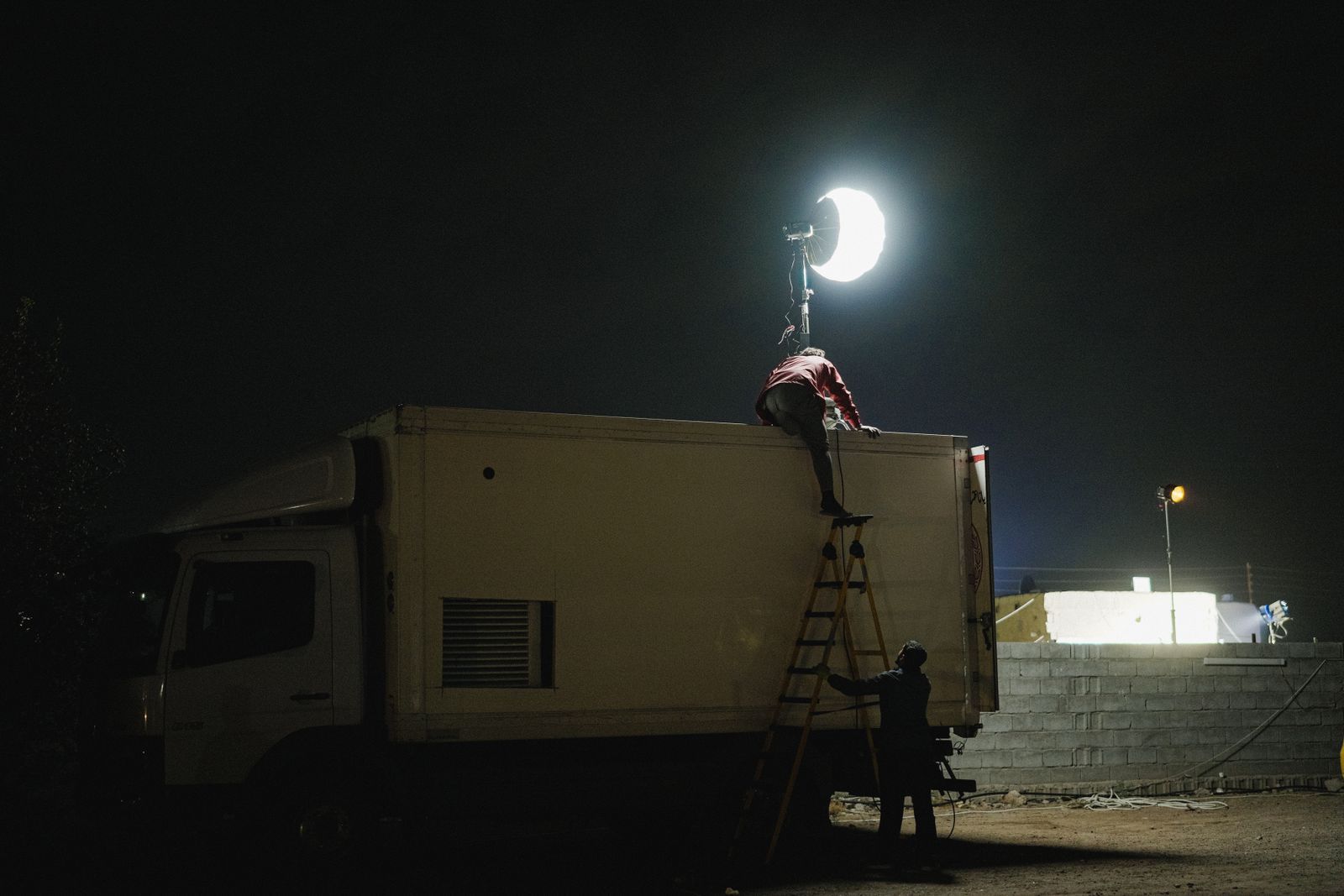

Lighting is the quickest way to change how an AI video feels. The same street can look romantic at golden hour, threatening under a flickering streetlight and lonely in grey morning drizzle. Video models have learned lighting from countless films and photos, so the right words give you remarkable control over mood, often more than changing the subject itself.
Time of day
Time of day sets the colour and angle of natural light:
- Golden hour: warm, low sun shortly after sunrise or before sunset. Soft shadows, glowing skin, nostalgic feel.
- Blue hour: just before sunrise or after sunset. Cool blue sky, city lights starting to glow, calm or melancholic.
- Midday sun: hard light from above, strong shadows, high contrast. Heat, exposure, harshness.
- Overcast: soft, even, shadowless light. Natural, documentary, sometimes bleak.
- Night: depends entirely on the light sources you name, from moonlight to neon.
Quality of light
Describe whether light is hard or soft:
- Soft light, “diffused”, “window light”, “softbox”: flattering, gentle, calm.
- Hard light, “direct sunlight”, “spotlight”, “harsh”: dramatic shadows, tension, drama.
- Volumetric light, “light rays”, “god rays”, “light beams through fog”: atmosphere, magic, spirituality.
Direction of light
- Front light: flat, clear, commercial.
- Side light: shape and texture, half the face in shadow, moody.
- Backlight or rim light: glowing outline, silhouette, heroic or dreamy.
- Top light: interrogation, isolation, stage spotlight.
- Under light: unnatural and eerie, the classic horror look.
Not every model follows direction precisely, but naming it pushes results in the right direction.
Practical light sources
Naming visible light sources makes scenes more believable and gives the model clear cues: candlelight, fireplace glow, neon signs, streetlights, car headlights, computer screen glow, lanterns, fluorescent office lights, a flashlight beam. “Lit only by the blue glow of a laptop screen” creates an instant mood.
Colour and grading
- Warm palette: oranges and yellows, comfort, nostalgia.
- Cool palette: blues and teals, calm, cold, technological.
- Teal and orange: the classic blockbuster look.
- Desaturated: gritty, serious, war and drama.
- Pastel: soft, whimsical, dreamy.
- Monochrome: black and white, timeless or noir.
- Neon pink and blue: cyberpunk, nightlife.
Weather and atmosphere
Atmosphere adds depth and mood: light fog, heavy mist, drizzle, pouring rain, falling snow, dust in the air, smoke, haze, steam. These also help hide small inconsistencies in the background, which is useful in AI video. “Light fog” behind a subject separates it from the background and adds depth.
Film looks
Format keywords bundle many lighting and colour decisions together: “35mm film”, “16mm grain”, “Kodak film look”, “VHS home video”, “1970s film stock”, “high-end commercial”, “documentary”. Use one at a time, and combine with specific lighting words for more control.
Genre recipes
| Genre | Lighting and mood words |
|---|---|
| Horror | low-key lighting, deep shadows, flickering light, cold blue tones, fog, under-lighting |
| Romance | golden hour, soft backlight, warm tones, shallow depth of field, lens flare |
| Noir | black and white, hard side light, venetian blind shadows, rain-wet streets, cigarette smoke |
| Sci-fi | cool blue and cyan, neon accents, volumetric beams, reflective surfaces |
| Fantasy | soft god rays, glowing particles, misty forest, warm and magical palette |
| Documentary | natural light, overcast, handheld, muted colours |
| Product ad | clean studio lighting, softbox, gradient background, crisp reflections |
Lighting consistency across shots
When you cut between shots of the same scene, the lighting must match, or the edit feels wrong. Write a lighting phrase for each scene and reuse it word for word in every prompt for that scene, for example “warm candlelight from the left, deep shadows, amber palette”. Then apply a matching colour grade to all shots in your editor. See Editing AI Clips for grading tips.
Common mistakes
- Conflicting light words: “golden hour, neon night, overcast” confuses the model. Choose one setting.
- Too many mood adjectives: “dark, scary, creepy, ominous, terrifying” adds little. One mood word plus specific light details works better.
- Ignoring the environment: an indoor scene with “sunset” needs a window: “warm sunset light through a window”.
- Expecting exact light positions: models approximate. For precise control, start from an image you lit the way you want.
Experiment: one scene, five moods
Try this exercise. Write a fixed scene, “a woman sitting alone at a kitchen table”, and generate it with five lighting phrases: golden hour through a window; harsh overhead fluorescent light; only candlelight, deep shadows; cold blue moonlight, rain on the window; soft overcast morning light. Keep the seed fixed. You will see five different stories from one scene, and you will learn which lighting words your model responds to best.
Light and story
Lighting can also change within a sequence to show a story moving forward. A scene might start in warm afternoon light and end in blue dusk as a character’s situation darkens. Planning those shifts across shots gives your video an emotional arc even without dialogue, and it is one of the simplest ways to make a collection of AI clips feel like a film.
Lighting for image-to-video
When you animate a still, the lighting is already baked into the image. Your prompt should not fight it: if the image shows warm sunset light, do not ask for “cold moonlight” in the motion prompt. Instead, describe how the light behaves: “candle flame flickers gently”, “sunlight shimmers on the water”, “neon sign buzzes and flickers”. Moving light is one of the most convincing kinds of motion in AI video and adds life to otherwise static scenes. A subtle flicker or a drifting cloud shadow often looks more natural than a large camera move.
Frequently asked questions
Can I control lighting precisely?
Roughly, through words. For exact control, design a still image with the lighting you want and animate it, keeping the motion subtle.
Why do my night scenes look grey?
Name strong light sources and contrast: “deep shadows”, “only lit by”, “high contrast”.
Does lighting affect stability?
Yes. Fog, low light and soft focus can hide small artifacts, while bright, flat light shows every flaw.
